OVERVIEW
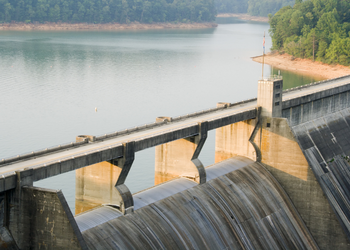
Throughout U.S. history, dams have provided a variety of benefits, including hydropower; navigation; recreation; water supply for domestic, industrial, and agricultural use; and other useful purposes to our society. Most dams in the U.S. were built more than half a century ago and many have outlived their initial planned purposes. As dams age, they require increasingly extensive and expensive maintenance and/or rehabilitation; continue to impose adverse environmental impacts on upstream and downstream aquatic ecosystems; present potential safety impacts to the public residing downstream or recreating in the vicinity of the dam; and continue to be a liability to dam owners. Many public and private dam owners throughout the nation are faced with the difficult choice between undertaking costly dam upgrades or opting for a typically less expensive - though not necessarily less complex - option of dam removal. Weighing the costs and benefits of each option can be a highly complex task.
PROFICIENCIES
To be proficient in this area one needs to understand and/or have experience in the following areas:
-
safety inspections for existing dams
-
regulatory processes involved in the rehabilitation or removal of a dam
-
watershed planning
-
community/business/personal dam-related decision making
-
ability to thoroughly assess and understand a dam's environmental, economic, and social benefits and impacts
-
consideration of community values as they relate to the dam and upstream impoundment
-
public communications
CLASSROOM AND WEB-BASED TRAINING
Succeeding with a Dam Removal Project. University of Wisconsin-Madison Dept. of Engineering Professional Development
For additional training, search the ASDSO Training Calendar.
RESEARCH & SUGGESTED REFERENCES
Listed below are some of the most highly recommended resources on dam removal. For additional resources, search the ASDSO Bibliography. Suggested search terms: removal, decision-making, environment, permits, restoration, social aspects, financial aspects, benefits
A Summary of Existing Research on Low-Head Dam Removal Projects (American Association of State Highway and Transportation Officials. 2005)
Dams and Dam Removal Web Page (American Rivers)
Exploring dam removal: a decision-making guide (American Rivers and Trout Unlimited. 2002)
Dam removal: a new option for a new century (The Aspen Institute. Program on Energy, the Environment, and the Economy. 2002)
Dam Safety Guidelines (Canadian Dam Association. 1999)
Dam removal: Science and decision making (The H. John Heinz III Center for Science Economics and the Environment. 2002)
Dam removal research: Status and prospects. Proceedings of The Heinz Center’s Dam Removal Research Workshop, October 23–24, 2002
Michigan Department of Natural Resources Website
TCEQ Dam Safety Program. TCEQ Dam Removal Guidelines (GI-358) (Texas Commission on Environmental Quality. 2006)
Harman, W., R. Starr, M. Carter, K. Tweedy, M. Clemmons, K. Suggs, C. Miller. 2012.
A Function-Based Framework for Stream Assessment and Restoration Projects. US Environmental Protection Agency, Office of Wetlands, Oceans, and Watersheds, Washington, DC. EPA 843-K-12-006.
Clearinghouse for Dam Removal Information (University of California at Berkeley)